Indianapolis Neighborhoods: A Buyer Guide
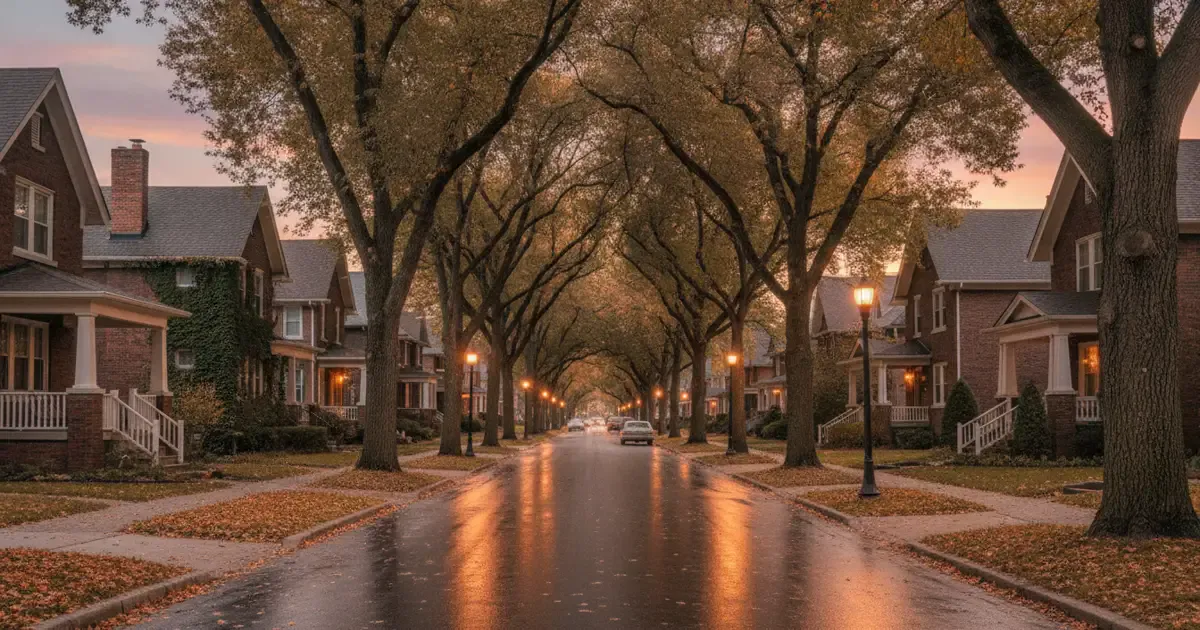
Indianapolis neighborhoods are not one market. A porch-front bungalow near the Monon Trail is a different purchase from a larger northside house. A downtown loft is different again. Each can sit a short drive from the others and still ask for its own commute, house type, and daily routine. This guide is a practical comparison for homebuyers. It is not a ranking and not a price list.
Talk with an AMR buyer agent about the neighborhoods on your short list
AMR Real Estate is a full-service brokerage based in Fishers. We help Indianapolis-area buyers search, compare areas, and tour homes. Listings on our search can include homes AMR does not list and sellers AMR does not represent. Nothing here is a school rating, a safety score, or a current sale price. Those change, and a citywide average will not tell you what a specific block is asking this month.
How to compare Indianapolis neighborhoods before you tour
Start with the life you actually live, then match housing and commute to it. A neighborhood that looks charming on a Saturday afternoon can be the wrong fit if your job, your household routine, or your weekend pattern points somewhere else.
Use four questions on every area you consider:
- Housing type. Are you shopping bungalows, larger period houses, doubles, lofts, or newer suburban houses? The stock is the constraint. You cannot will a yard-and-garage house into a downtown block that was built as commercial storefronts.
- How you get around. Some corridors have frequent bus rapid transit and a trail. Others assume a car and a highway. Check the trip you make most often, not the trip that looks shortest on a map.
- What you want outside the front door. Arts venues, a trail, a commercial street, or a quieter residential block are different products. Name the one you would use on a weeknight.
- What you still need to verify in person. Parking, flood history, renovation rules in a local historic district, and the condition of a specific house are property facts. A neighborhood label does not answer them.
Once the short list is real, run the payment through the AMR mortgage calculator. It is an illustration, not a rate quote or a loan approval. AMR does not originate mortgages. Before you wire funds, read the Consumer Financial Protection Bureau's Closing Disclosure explainer. It shows where taxes, insurance, and cash to close appear on the form.
Five central neighborhoods, side by side
These five are a starting map of central Indianapolis, not a complete list. Fishers, Carmel, Greenwood, and the other suburbs are separate searches. So is any single-neighborhood deep dive.
| Neighborhood. | Where it sits. | Housing you will mostly see. | Getting around. | Buyer it tends to fit. |
|---|---|---|---|---|
| Broad Ripple. | Northeast, between the White River, Evanston Avenue, Kessler Boulevard, and Meridian Street. | Early-1900s houses, especially bungalows, plus a commercial village. | Monon Trail passes Broad Ripple Village; IndyGo Red Line serves the corridor. | Buyers who want a walkable village and trail access, and who will compare older houses carefully. |
| Fountain Square. | Near southeast side, at Virginia Avenue, Prospect Street, and Shelby Street. | Historic commercial buildings and older nearby houses, not a subdivision of new builds. | IndyGo Red Line and the Cultural Trail; also close to the interstate. | Buyers who want a compact, arts-and-dining district and can live with older buildings. |
| Irvington. | East side, roughly 10th Street, Arlington Avenue, Brookville Road, and Emerson Avenue. | Historic houses on a planned, winding street layout, including early Second Empire and Italianate homes. | A residential eastside pattern; confirm your own drive, since this is not the Red Line spine. | Buyers who want historic character and will follow local historic-district rules on exterior changes. |
| Meridian-Kessler. | North side: Kessler Boulevard, Meridian Street, the former Monon corridor, and 38th Street. | Early-20th-century mix: American foursquares, bungalows, and Colonial, Tudor, and Classical Revival houses. | The Monon corridor is the east edge; most daily trips are still a car trip to check yourself. | Buyers shopping larger historic houses on leafy streets, with a wide range of sizes and upkeep. |
| Mass Ave. | Northeast diagonal from the Mile Square, a commercial and cultural corridor. | Historic commercial and mixed buildings, plus later adaptive-reuse projects, rather than lawn-front subdivisions. | Built as a route into the center; walkable to downtown and served by city transit. | Buyers who want to live in the middle of dining, art, and downtown access. |
Use the comparison above as a filter, not a winner. "Tends to fit" means the built environment matches that buyer. It is not a promise about schools, crime, resale, or what a house on that street costs today.
Broad Ripple: a village built around a canal, a trail, and older houses
Broad Ripple began as two canal settlements. Jacob Coil platted Broad Ripple north of the Central Canal in April 1837. James and Adam Nelson platted Wellington on the south bank a month later. The towns incorporated together in 1884. Indianapolis annexed Broad Ripple in 1922. Many of the houses went up after 1900, and bungalows are a common style. The Encyclopedia of Indianapolis is the source for that history and for the boundaries: White River, Evanston Avenue, Kessler Boulevard, and Meridian Street.
The public pieces that still shape a buyer's day are easy to check. Indy Parks describes the Monon Trail as running from 10th Street to 96th Street before it continues into Hamilton County, and lists Broad Ripple Village among the places it passes. The City of Indianapolis lists that city stretch at 10.4 miles. IndyGo's Red Line is a 13-mile bus rapid transit route through the heart of the city. IndyGo's project page describes frequent service between Broad Ripple and the University of Indianapolis. Broad Ripple Village was also one of the city's first five cultural districts, named when the program launched in 2003, according to the city's cultural district page.
For a buyer, that combination means you can shop an older house and still be near a trail and a frequent bus. It also means you should underwrite the house, not the postcard. Bungalows of this age often need a close look at foundations, wiring, plumbing, and additions. Tour on a weeknight and a weekend so the village's evening traffic is not a surprise. AMR can pull current Broad Ripple listings into a search. Inventory and prices move, so we will not print either here.
Fountain Square: a historic commercial corner, not a new subdivision
Fountain Square sits where Virginia Avenue meets Prospect and Shelby streets, on the near southeast side. It has been a commercial center for more than a century. The streetcar reached the intersection in 1864. German businesses followed. By the 1910s and 1920s the square was the city's first cinema district. The Fountain Square Theatre opened in 1928. The Encyclopedia of Indianapolis records that timeline.
The district was listed on the National Register of Historic Places in 1983. The same encyclopedia notes that recognition as an Indianapolis cultural district came in 1999, after restaurants, galleries, and live entertainment returned. The city's cultural-district page dates the first five designations, including Fountain Square, to 2003. Either way, the point for a buyer is the same. This is a designated cultural and historic commercial district, still tied into the Cultural Trail and the IndyGo Red Line.
Buy the building type that is actually here. You are looking at older commercial fabric and nearby houses, with highway access nearby because interstate construction reshaped the surrounding blocks in the 1960s. Parking, noise from Virginia Avenue, and the rules that come with a historic building are the diligence items. If you want a new-construction yard, this is the wrong page of the map.
Irvington: a planned eastside suburb with real historic-district rules
Irvington was planned, not improvised. In November 1870, Jacob B. Julian and Sylvester Johnson bought about 300 acres along the National Road. Surveyor Robert Howard laid out 109 lots on winding streets meant to echo Glendale, Ohio. The town was named for Washington Irving and incorporated in March 1873. Butler University, then Northwestern Christian University, moved to Irvington in the mid-1870s. That is why the neighborhood still carries a campus-town layer in its history. Those facts are from the Encyclopedia of Indianapolis entry on Irvington.
Two designations matter before you renovate. In 1987 a 545-acre historic district was listed on the National Register of Historic Places, the largest such district in Marion County. In 2006 the Indianapolis Historic Preservation Commission defined much of the neighborhood as an official city historic district. National Register listing is not the same thing as a local design review. If the house sits inside the local district, exterior changes can require commission approval. Ask that question before you budget a new porch, windows, or an addition.
The streets are the product: curving, residential, and east of downtown. Do not assume the Red Line is your commute. Time the drive you will actually make. Treat "historic charm" as a maintenance plan as much as a look.
Meridian-Kessler: northside houses from bungalows to period revivals
Meridian-Kessler takes its name from its edges. Kessler Boulevard and Meridian Street are the northern and western boundaries. The former Monon Railroad corridor is the east edge, and 38th Street is the south edge. The land was surveyed in 1822 and stayed rural through the 1800s. The houses people shop today arrived mainly in the 1920s and 1930s, as Indianapolis grew north and Broad Ripple grew south. The Encyclopedia of Indianapolis is the source for those boundaries and dates.
The range is the useful fact. South of 44th Street, the American foursquare is common. East of College Avenue, bungalows are common. West of College Avenue, larger period-revival houses are common. Colonial Revival, Tudor Revival, and Classical Revival sit throughout. Two pioneer-era houses are still standing. The Hardin House at 4644 North Central Avenue was built around 1832. The Oliver Johnson House at 4456 North Park Avenue was built around 1862.
That spread is why a single "Meridian-Kessler price" is not a useful number. A foursquare and a large Tudor on the other side of College can be different purchases. The Meridian-Kessler Neighborhood Association has organized an annual home tour since 1973, which is a practical way to see interiors. A tour is not a comparable sale. Pair any house here with a drive down to 38th Street at the hour you would leave for work.
Mass Ave: downtown living on a cultural corridor
Massachusetts Avenue is one of the four diagonal streets in Alexander Ralston's 1821 plat of Indianapolis. It was laid out as a way in from the outer neighborhoods and became a commercial street of its own. The Athenaeum, built as Das Deutsche Haus in 1894, and the Murat, now Old National Centre (1909), are among the landmarks. The 300 block through the 900 block was listed on the National Register of Historic Places in December 1982. Mass Ave was named one of the city's cultural districts in 2003. The Encyclopedia of Indianapolis covers that history. Later projects, including the Bottleworks reuse of the former Coca-Cola bottling plant, added more retail and a hotel to the corridor.
For a buyer, Mass Ave is center-city living. You are shopping historic mixed-use fabric and later apartments, not a lawn on a cul-de-sac. Walkability to downtown is the amenity. So is weekend activity on the avenue, which some buyers want and others will not. If a dedicated bus lane matters to your commute, confirm the stop you would actually use. The Red Line runs through central Indianapolis, but a cultural-district address is not automatically a station address.
What this comparison will not decide for you
A neighborhood guide that hands out a "best of" label usually smuggles in a school ranking, a crime statistic, or a median price that expires. This one does not.
- Schools. District lines and school performance are their own research. Look up the address, not the neighborhood nickname.
- Safety. Block-level conditions are not a slogan. Visit at the hours you would come and go, and use current local reports rather than a blog rating.
- Price. Citywide medians hide the gap between a Fountain Square building and a Meridian-Kessler revival house. Search the live listings instead of trusting a printed number.
- Every Indianapolis neighborhood. Butler-Tarkington, Bates-Hendricks, the suburbs north and south of the county, and dozens of others are real choices. They need their own pages. Families comparing areas for household fit, and first-time buyers comparing assistance programs, are adjacent questions this article does not answer.
Indianapolis also designated a one-time Cultural District Fund in 2025 and named additional districts beyond the original five. Treat any "new district" headline as a city program, then confirm what it changes for a specific property. A designation is not a renovation grant for your house unless the program says so in writing.
If you are weighing a home against staying a renter, AMR already has a separate renter's neighborhood edition. The buying process itself, from budget to offer to closing, is covered in the Indianapolis home buyer's guide. Use those for those questions. Use this page to decide which streets are worth a tour. To confirm a boundary before you compare two houses, check the address on the city-county My Neighborhood map.
A short tour plan that keeps the comparison honest
- Pick two or three neighborhoods from the table, not eight. More stops usually means a blur, not a decision.
- Search current homes in those areas only. On the AMR home search, filter to the streets you would actually consider. Remember that results can include listings from other brokerages.
- Drive the commute you care about, once in daylight and once when you would normally travel. A Red Line trip and a highway trip are different products. Time yours.
- On the tour, ask what is historic-district regulated, what has been updated, and what the next expensive system is. Irvington and the commercial districts are where this question pays off first.
- Bring the payment back to a calculator and a lender. The neighborhood can be right and the house can still be the wrong monthly number.
AMR buyer agents work with first-time buyers and with people buying their next house, including military families relocating to Indianapolis. We do not limit buyer representation to one niche. A buyer closing can happen in as little as 14 days in some transactions. That is possible, not a promise that every file closes on that timeline.
FAQ
Which Indianapolis neighborhood is best for buyers?
None of them is best in the abstract. Broad Ripple fits buyers who want a village, the Monon Trail, and older houses. Fountain Square and Mass Ave fit buyers who want a cultural district and can live in older or mixed-use buildings. Irvington fits buyers who want a planned historic eastside neighborhood and will follow local design rules. Meridian-Kessler fits buyers shopping a wide range of early-20th-century houses. Match the housing and the commute to your life, then verify the specific house.
Do these neighborhoods have different commute options?
Yes. IndyGo's Red Line is a 13-mile bus rapid transit route through central Indianapolis, with frequent service that IndyGo describes between Broad Ripple and the University of Indianapolis, including Fountain Square. The Monon Trail is a separate walking and biking route from 10th Street to 96th Street, passing Broad Ripple, with Meridian-Kessler's east edge on the old Monon corridor. Irvington is a residential eastside neighborhood, so plan on timing a car trip unless you confirm a bus that matches your hours.
Can I trust a median home price for a neighborhood?
Not as a shopping number. A citywide or neighborhood median blends different house types and goes stale. Use it only as background, then look at current listings and recent sales for homes like the one you want. AMR's search shows live inventory, including homes AMR does not list or represent.
What should I verify before offering in a historic district?
Confirm whether the house is inside a local Indianapolis Historic Preservation Commission district, not only a National Register district. Irvington has both: a large National Register district listed in 1987 and a city historic district defined in 2006. Local designation can mean exterior changes need approval. Also verify parking, flood history, and system updates on that exact property.
Does AMR only help buyers in these five areas?
No. These five are a comparison set for central Indianapolis. AMR Real Estate represents buyers across the Indianapolis area, with a Fishers headquarters, and the same search-and-tour process applies in other neighborhoods and suburbs. Contact the buyer team and name the areas you care about.
Categories
Recent Posts